
I grabbed a chance to talk to Timothée Chalamet just before the premiere of Josh Safdie’s “Marty Supreme” in New York. The actor was walking down the street, “freezing,” he said, as we talked on the phone. He’s earning raves for his bravura performance as a ’50s New York table tennis champion (based on real-life petty criminal Marty Reisman) who will not be stopped from playing for the world championship in Tokyo, Japan. Unfortunately, he must overcome countless obstacles along the way, and in pursuit of his dream, he does not always behave well. Au contraire.
Nor does the preternaturally confident Chalamet comport himself like the usual humble Oscar contender, as he builds on his “I’m in pursuit of greatness” SAG Award speech with claims about his great past performances and future (presumably Oscar) success. We get into that in the interview below. (He’s saving his comments about “Dune: Part Three” for next year.)

For the record, I believe he will win that Best Actor Oscar. But he has to beat the hugely popular Leonardo DiCaprio in what many consider to be his best role to date in “One Battle After Another,” the Best Picture frontrunner. Chalamet’s preening may not play well in some quarters. Below, he explains himself.
The following interview has been edited and condensed for clarity and length.
Anne Thompson: I first saw “Marty Supreme” at the surprise New York Film Festival screening. What was it like to be there for that unveiling?
Timothée Chalamet: That was great. It’s a project I’m so deeply proud of. So that moment of first reveal. It’s tough. And obviously it was Josh’s decision and A24, but I had some input on it, too. It was bold, doing a surprise screening. And it was dead-on. It was one of the best screening experiences I’ve had in my life.
Oh, it played great.
Yeah, that urgency and that freshness is in line with the ethos of the movie. It’s so zigzagging in plot. Its untraditional structure doesn’t follow screenwriting “act one, act two, act three.”
Also unconventional is the degree to which the singularly driven Marty is reprehensible. He does a lot of objectionable things. At the end of the movie, he is redeemed.
I totally agree. That’s what I think we were going for. I don’t know if I would use the word redeemed. I looked at it more like a confrontation at the end, like a confrontation with this whole new chapter of life, with adulthood, and it just begs the question: What will become of this young man? Will he step into responsibility? Will he step into being accountable? Or will he continue to fuck up? And that’s really how I saw that, accepting that responsibility.
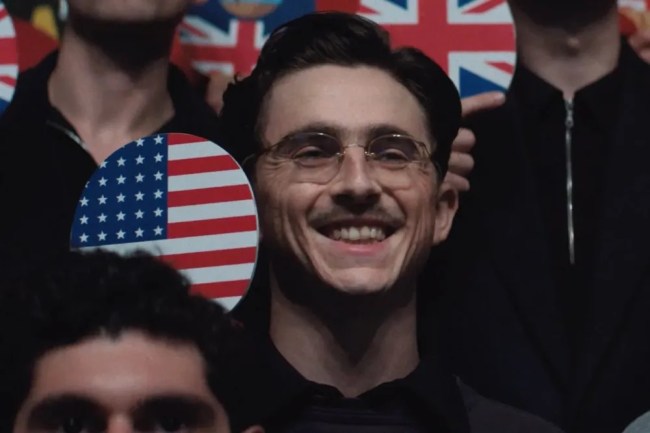
You did some things to alter your appearance.
That was all at Josh’s discretion; the amazing eye for detail he had, he just wanted to paint a portrait of a man on the Lower East Side in the ’50s at a time when self-care was different, to put it in modern terms. And as far as the glasses go, where I was wearing -6.5 prescription contacts to offset what the actual lenses and glasses were doing, he wanted from a performance perspective to impair me, so it can feel like I was living in a fishbowl, and see what that did to me in my body and my spirit as a human but equally to the audience, to the visual effect that I had on camera, to show a guy who’s living a life as an outsider, and a life of impairment.
I thought he wanted your eyes to look smaller.
It was a dual effect. He wanted my eyes to be beadier, smaller. Basically, he wanted me to have that experience as a performer, as the person. I can’t see shit. But I got used to wearing the contacts and the glasses.
Do you like playing characters who are complicated and not likable, necessarily, including Bob Dylan and Paul Atreides?
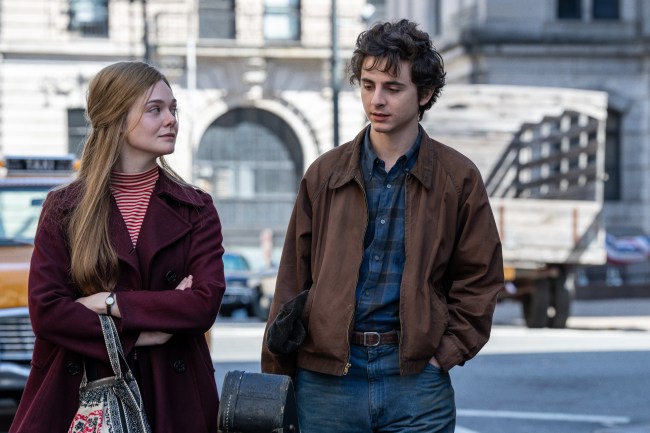
I would frame it the opposite way, which is, I don’t want to play people that are written in a broad way. The gift to my career is to play projects where sometimes it’s a morally ambiguous blend to the film. Sometimes, the character is morally ambiguous. You want to play real, real people, real life. Life is messy. Marty is a real guy that has positive qualities about him. He’s a big dreamer. He’s a hard worker. He believes in what he believes in, his native qualities. He’s not particularly attuned to other people in his life that care for him. He’s willing to cross lines ethically and physically to get to where he wants.
Were you practicing ping-pong and the guitar at the same time?
On and off for about five, six years. So it’s not like every day. Actually, there was a period a little bit after the actors strike, before I really had a locked in a Dylan date or a Marty date, where I would wake up in LA and do first half of the morning table tennis, second half guitar stuff. But otherwise, it wasn’t a structured process over the course of six years. It’s more like picking it up when I was passionate about it, and otherwise putting it down for a while. It’s the best way to learn something, in my opinion, to do it with passion and curiosity. Not on a deadline.
Are you learning the motocross now for your next James Mangold movie?
I got like three things I’m kicking up field, and that’s one of them. I’ve just begun though.
What are the others?
I can’t say that.
You seem very confident for the most part, but that isn’t always possible. There must be moments when you feel anxious about something. Is there a role that was more anxiety-provoking than any other one, whether “Wonka” or “Dune”?
Well, I wouldn’t say anxiety is the opposite of confidence, but I would say, in performance, I have a technical approach to every role I’ve done. That process and approach is different. It’s not like I have a playbook. But when it comes down to it, production days, 12 hours usually, there’s not a lot of time to be doubtful, not even like in a combative sense, or as an athletic showman. You’re getting through the day, if you’re lucky, and disciplined, and keep a level of focus for that.
So whether it’s “The King,” which was a swing at the time, playing Henry V as a 22-year-old New Yorker, or any of the films you just cited, I wouldn’t say there’s ever been anxiety in doing them. I’m talking day to day, and certainly, and you wonder how’s this going to be, so much is out of your hands artistically. Curiosity is the feeling that it’s out of your hands a little bit, depending on the project, some more than others. But for instance, on “Dune: Part Three,” I know the amazing projects Denis [Villeneuve] has delivered twice in a row. Same thing with Safdie: I was certain of what movie I was in.
Josh told me there was a different ending in the movie that takes Marty into the future.
It was a thing that would play over the credits, more like it would have been a way to tie up the theme a little more clearly of Marty’s future and what would have happened to him. Honestly, we ran out of time or something. I did an enormous six-hour prosthetic aging thing, like you see at the end of “Oppenheimer,” and we never used it. They built it and everything.
One of the people who surprised me in this movie is “Shark Tank” star Kevin O’Leary. The two of you go at it, and I have to say he scared the shit out of me. What was it like to go toe to toe with him?
He’s famously like that. At a Q&A last night, he goes, “They got a great guy to play an asshole, because I’m an asshole.” I’m not speaking out of turn when I say, honestly, it was really refreshing to be around someone that wasn’t pretending to be a villain, not refreshing from a life point of view, from an artistic one, I was like, “Wow, this is a real deal, man. I’m playing out this sequence opposite someone that literally is like this.” It helped me root for Marty. Kevin did this Q&A last night, speaking about everything from Milton’s point of view. He’s talking about Marty: “He’s fucking him over the whole movie, and he doesn’t pay for it. Like, how is that your protagonist?” This guy really believes in this ruthless approach to life. To have someone bring a note or flavor to a movie that is doing so genuinely was cool.
The way you talk about your aspiration for greatness over your career, was there a moment when you pivoted, a shift at some point, where you started to push it to another level, to do the best you can possibly do? A eureka shift?
“He who is not busy being born is busy dying.” Simple as that. That Dylan lyric resonated with me so tremendously. Certainly, everyone needs respite and relaxation and healing at times, and I’m not speaking in some maniacal pursuit way, but with such a unique lifestyle and career opportunity, that is to say, to work at a high level, why not be passionate about it at all? I’ve always given it my all. That’s evident in my early work: “Bones and All,” “Call Me by Your Name,” “Beautiful Boy,” or “The King,” but I do believe my artistry is growing. It’s in formation. My foundation has gotten stronger as an artist. So my canvas board got bigger, or my palette.
You have also been picking good directors to work with. You’re working with James Mangold again. They help you, right?
I’m in the director’s medium. The terms I’m talking in is a bit ludicrous, because I’m only as good as the strength of my directors, from Greta [Gerwig] to James [Mangold], to Luca [Guadagnino], to Denis [Villeneuve], to Wes [Anderson], to Josh [Safdie]. I’ve been fortunate to work with the highest level of directors. Equally, I’m so curious about what it means to have authorship as an actor, not only over your character, but over the tone, the feeling of a movie. Even in putting it out.
Yes, you have a lot of say in how you present. We are doing a conventional interview here, but you do a lot of other things. Whose idea was the A24 Zoom marketing meeting posted on Instagram? Who came up with that? The orange blimp came to pass!
That Zoom I wrote and directed. It was my idea.
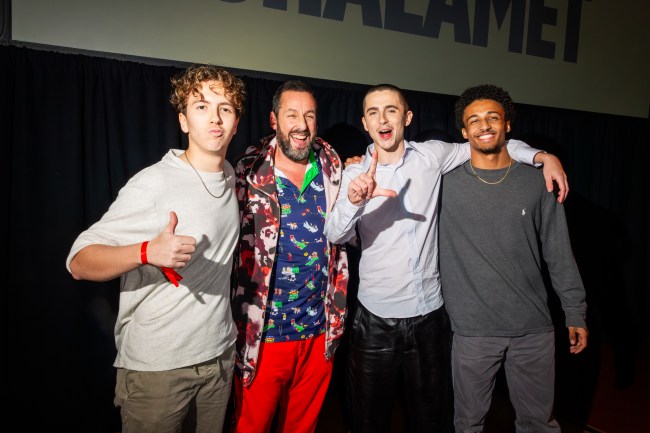
You like to change things up on the publicity front, as with the deep-dive music podcast and the Fairfax High School basketball event with Adam Sandler.
Nardwuar is an artist in his own right, and way ahead of his time in that he found a niche thing to do, the way a lot of people do on TikTok now. And made a career out of it.
Now I’m going to ask the question you don’t want me to ask: You have been stating how good your performances have been. (One got taken down.) On GMA, you predicted that next summer, things will have gone very well. Are you going to be more careful about how you talk from now on?
Why would I not like that question? This is in the spirit of Marty, and I feel like this is ultimately an original film at a time when original movies aren’t really put out. It’s a movie about the pursuit of a dream. I’m leaving it on the field. Whether it’s the merch or the Zoom or the media appearances, I’m trying to get this out in the biggest way possible. In the spirit of Marty Mauser.
“Marty Supreme” is now in theaters from A24.